
Volkswagen Golf Owners Manual: Starter button
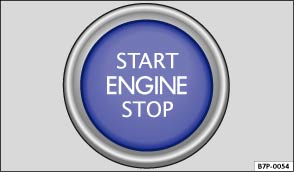
Fig. 129 In the lower part of the centre console: starter button for the Keyless Access locking and starting system
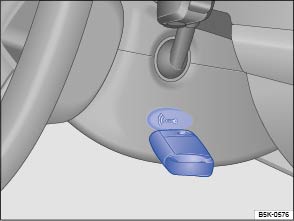
Fig. 130 Emergency start function in vehicles with Keyless Access
 First read and observe the introductory information
and safety warnings
First read and observe the introductory information
and safety warnings The starter button can only be operated if there is a valid key in the vehicle.
When leaving the vehicle, the electronic steering column lock will be activated when the ignition is switched off and the driver door is opened .
Switching the ignition on or off
- Press the starter button once briefly without depressing the brake or clutch pedals .
Emergency start function
Use the emergency start function when there is no valid vehicle key in the vehicle interior. A corresponding display will appear in the instrument cluster. This could be the case, for example, if the battery in the vehicle key is weak or discharged.
- Hold the vehicle key to the right of the steering column trim directly after pressing the starter button .
- The ignition is switched on automatically, and in some cases the engine is started.
Emergency switch-off function
If the engine cannot be switched off by pressing the starter button briefly, an emergency switch-off procedure is required:
- Press the starter button twice within 3 seconds or once for longer than 1 second .
- The engine will switch off automatically.
Engine restart function
If no valid vehicle key is detected in the vehicle interior once the engine has been switched off, the engine can be restarted within approximately 5 seconds. A corresponding message appears in the instrument cluster display.
After this time, the engine cannot be re-started without a valid vehicle key in the vehicle interior.

 WARNING
- Do not depress the brake or clutch pedal when the ignition is switched on as this could cause the engine to start immediately.
WARNING
- Always take all vehicle keys with you every time you leave the vehicle. Children or third parties could lock the vehicle, start the engine, switch on the ignition or operate electrical equipment such as the electric windows.

In vehicles with diesel engines and Keyless Access, the engine start may be delayed if the engine has to be preheated.
 Ignition lock
Fig. 128 Positions of the vehicle key in
the ignition lock
First read and observe the introductory information
and safety warnings The steering lock can be activated when there is no vehicle
...
 Starting the engine
First read and observe the introductory information
and safety warnings
The steps should only be carried out in the specified
order.
Step
...
Other materials:
Downhill driving assistant
First read and observe the introductory information
and safety warnings The downhill driving assistant in vehicles with an automatic
gearbox helps when braking and travelling downhill . The downhill driving assistant
uses the braking power of the engine.
The automatic gearbox selects th ...
Assembly overview - lower rear lid trim
1 -
Rear lid
2 -
Bolt
Qty. 4
1.5 Nm
3 -
Lower rear lid trim
Removing and installing
→ Chapter
4 -
Retaining clip
Insert into trim
Remove any retaini ...
Removing and installing rear seat backrest cover and padding
Special tools and workshop equipment
required
Removal wedge -3409
Wedges -T10383-
Removing
– ...
